

Komondor
Complete Breed Guide
"I'll be your knight in white armor!"

Quick Facts About Komondors

Working

80–100 lbs

25–28"

No
Based on current listing prices on Puppies.com. Results may vary.
Overview
Komondors are playful yet protective, feisty yet devoted, headstrong yet lovable. They need attention and care from a young age but become more independent with time. Training is key to keep Komondors friendly. They may have a sheepish grin, but they’ll go to great lengths to keep you safe.
Komondors are notorious for their naturally watchful instincts, so you'll definitely feel safe in your home with this friend by your side. They can be hostile with strangers, but run your hands through their signature corded coat a few times, and you'll be a trusted friend. At 60-100 pounds, Komondors are gentle giants. They love snuggling on the couch after a day of walking and training. Socialization is key for Komondors, including training as puppies and a close eye at all times. Once fully trained, they live well in nearly any kind of home, including apartments and condos, but they prefer cooler climates and families with older children.
Temperament and Behavior
Komondors are courageous, loyal, and watchful. They love quiet time and will be affectionate and friendly until their family or home is threatened. Then, they’ll fight to protect without hesitation. Komondors don't warm up to strangers quickly, but they’ll generally get acquainted over time. This breed can be independent and stubborn at times, but they make a perfect companion with the right training. Komondors are extremely intelligent and will learn quickly what's safe, acceptable, and fun.
Coat & Grooming
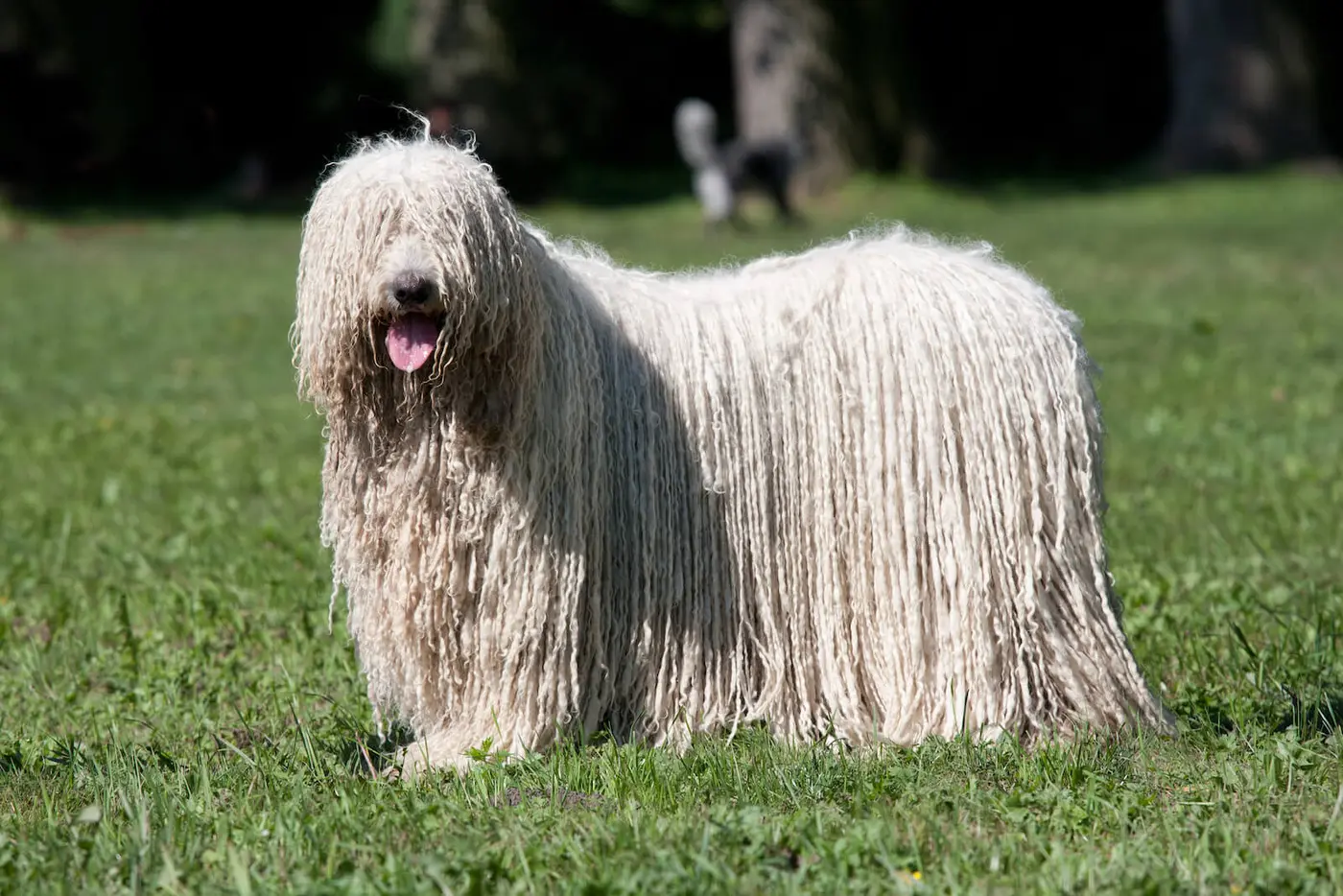
Komondors are known for their white corded coats, which begin to develop their natural swirling pattern around one or two years old. The longer, thicker outer coat rests on top of a soft undercoat, creating a warm barrier for them. Because of their double layer of fur, Komondors don't do well in warm climates. Their heavy coat provides protection from predators but doesn't take well to rain. Komondors shed little to no fur, and their coats should be regularly separated by hand to remove dirt. They also need an occasional bath to prevent collecting fleas and ticks, but when they get wet, Komondors can take hours or days to fully dry.
Lifestyle & Living Conditions
Komondors require strict, consistent training at an early age because of their natural protective tendencies. Obedience training is strongly recommended, and praise-based approaches will likely produce the best results. They should be socialized with their training to prevent adversity to strangers and new pets. If socialized, Komondors genuinely appreciate the company of another dog. This breed does best with older children and requires supervision around young kids, as they may bite if they feel provoked.
Exercise & Activity
The Komondor requires daily exercise, such as a walk or playtime in the yard. When they're young, these dogs may need more strenuous activity, but they’ll grow calmer with age. Swimming may not be a great idea because Komondors take a long time to dry off. They’re known to chew as puppies and should not be left alone for long periods of time until proven trustworthy. Keeping puppies active with walks and training is the best way to prepare them for household living.
Characteristics at-a-glance
Ratings are on a scale of 1–10, based on breed standards and typical temperament.
Komondor FAQs
Common questions about the Komondor breed, answered by our editorial team.
Find Komondor Puppies