

Neapolitan Mastiff
Complete Breed Guide
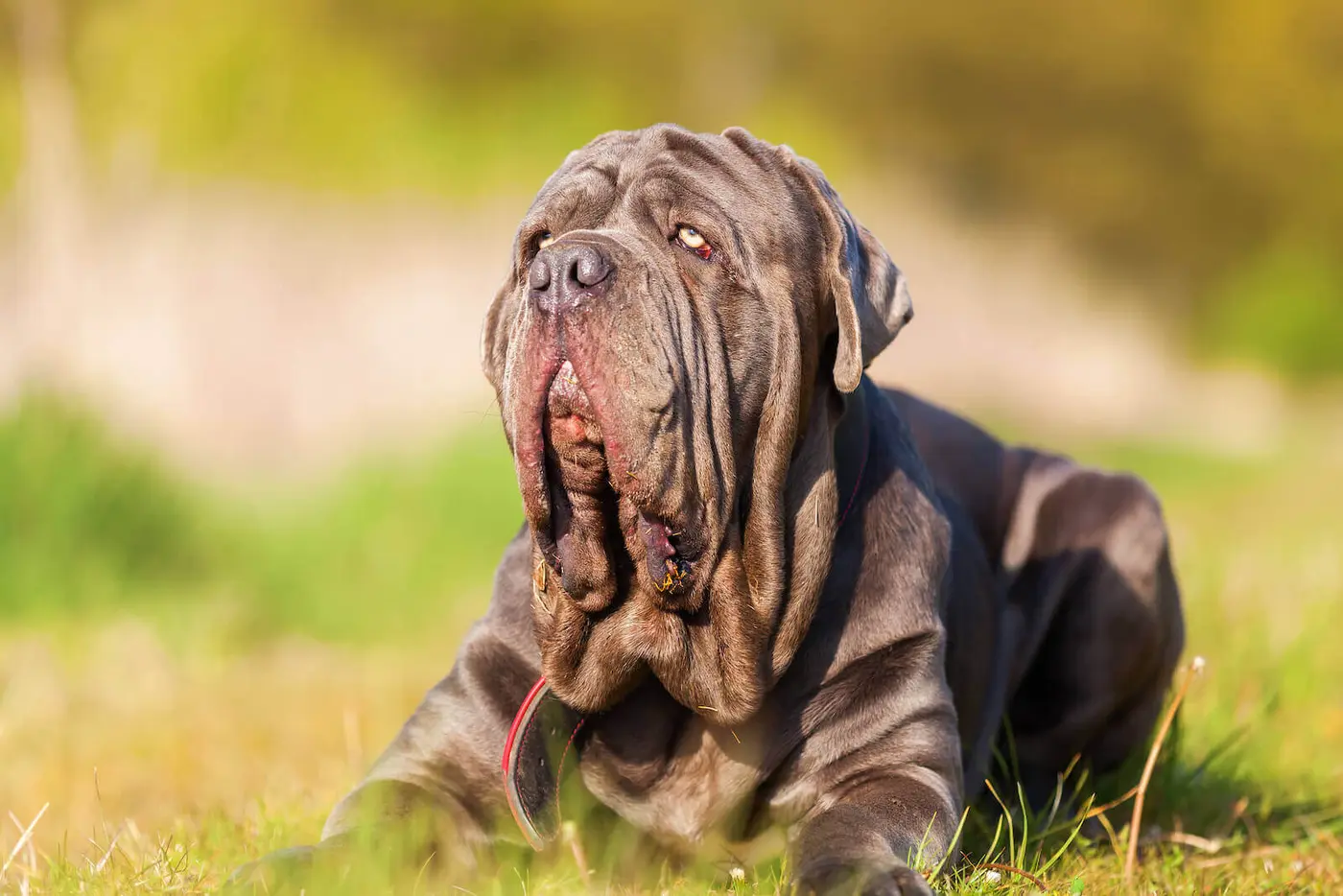
"I’ve got my eye on you!"

Quick Facts About Neapolitan Mastiffs

Working

110–150 lbs

24–31"

No
Based on current listing prices on Puppies.com. Results may vary.
Overview
Neapolitan Mastiffs love being large and in charge. Unlike other Mastiffs, this breed isn’t a gentle giant. They're loyal protectors that can be good family dogs when socialized early, but strangers and other animals beware: this pup means business.
Behind the lovable, wrinkly face and goofy grin of the Neapolitan Mastiff is a diehard protector that’s keeping an eye on you at all times. While their features may be similar to Mastiffs, the Neapolitan Mastiff’s personality is quite different. These guard dogs have natural protective instincts that are aided by their massive size and impressive power. Nicknamed “Neos,” Neapolitan Mastiffs can be good family dogs if trained and socialized early, but they’re known for getting aggressive when strangers or animals encroach on their territory. These dogs will move quickly if they sense danger is near, but otherwise, they’re calm, cool, and collected.
Temperament and Behavior
Neapolitan Mastiffs are gentle like their Mastiff counterparts but are much more protective. Calm yet powerful, this breed was developed to be guard dogs, so they are highly suspicious of strangers and protective of their property and family. These dogs don’t bark unless necessary, but when they do, you know it’s time to pay attention. Neapolitan Mastiffs are noble, smart, and majestic creatures, but they’re known to drool and make a mess while eating and drinking.
Coat & Grooming
The Neapolitan Mastiff has a short, dense coat of smooth, fine hair that feels hard to the touch. These dogs can be standard grey, leaden grey, dove-grey, leaden black, brown, fawn, deep fawn, light fawn, or hazel. White patches on their chest and tips of their toes are common as well. The Neapolitan Mastiff’s coat is low maintenance when it comes to grooming, but their skin is not. The dewlap and facial folds need frequent cleaning to avoid bacteria and infection.
Lifestyle & Living Conditions
Neapolitan Mastiffs are very good with children, pets, and other animals if socialized early, but they need close supervision around young kids because of their massive size. Male Neapolitan Mastiffs can get aggressive with other male dogs. The breed’s size contributes to their shorter lifespan (8-10 years) and may make them more susceptible to health problems, like hip and elbow dysplasia and cardiomyopathy. Keep your Neapolitan Mastiff healthy and happy by making their primary living space indoors (preferably in a home, not an apartment), avoiding hot weather, and providing enough physical activity.
Exercise & Activity
Despite their large size, the adult Neapolitan Mastiff isn’t a very active breed. These dogs only need an average amount of exercise, such as a walk or play session in a large, fenced-in yard. Puppies shouldn’t be over exercised because they grow quickly and need all of their energy to build strong bones and put on weight. During activities, you may find the Neapolitan Mastiff to be a bit stubborn, but with obedience training and mutual respect, they will obey and recognize your authority.
Characteristics at-a-glance
Ratings are on a scale of 1–10, based on breed standards and typical temperament.
Neapolitan Mastiff FAQs
Common questions about the Neapolitan Mastiff breed, answered by our editorial team.
Find Neapolitan Mastiff Puppies